




Starbucks is continuing to reshape its store footprint as part of a sweeping turnaround effort to reverse declining customer traffic and slowing sales growth.
The coffee giant has made significant changes across its business in recent years, including closing hundreds of locations while investing heavily in store upgrades and new formats designed to win back customers.
The strategy has already produced some unexpected moves.
In September 2025, Starbucks surprised many customers when it permanently closed two major Starbucks Reserve Roastery locations in Seattle: one inside its global headquarters building after nine years in the city’s SODO district and another after 11 years on Capitol Hill.
Now, more closures are planned in the company’s hometown market.
Starbucks confirms closure of five stores
Starbucks confirmed it will permanently close five Seattle coffeehouses in April 2026, four of which are unionized.
“We regularly review how our coffeehouses serve their neighborhoods and if they are meeting customers where they are. Sometimes that means investing in updates or trying new formats,” said Starbucks spokesperson Jaci Anderson in a media statement. “Other times, it means making the difficult decision to close a location that no longer fits how people in that community live, work, or gather.”
Seattle stores closing
- 1101 Madison St.: Unionized
- 4147 University Way N.E.: Unionized
- 305 Harrison St., Suite 220: Unionized
- 4800 Sand Point Way N.E.: Unionized
- 1730 Minor Ave.: Non-union
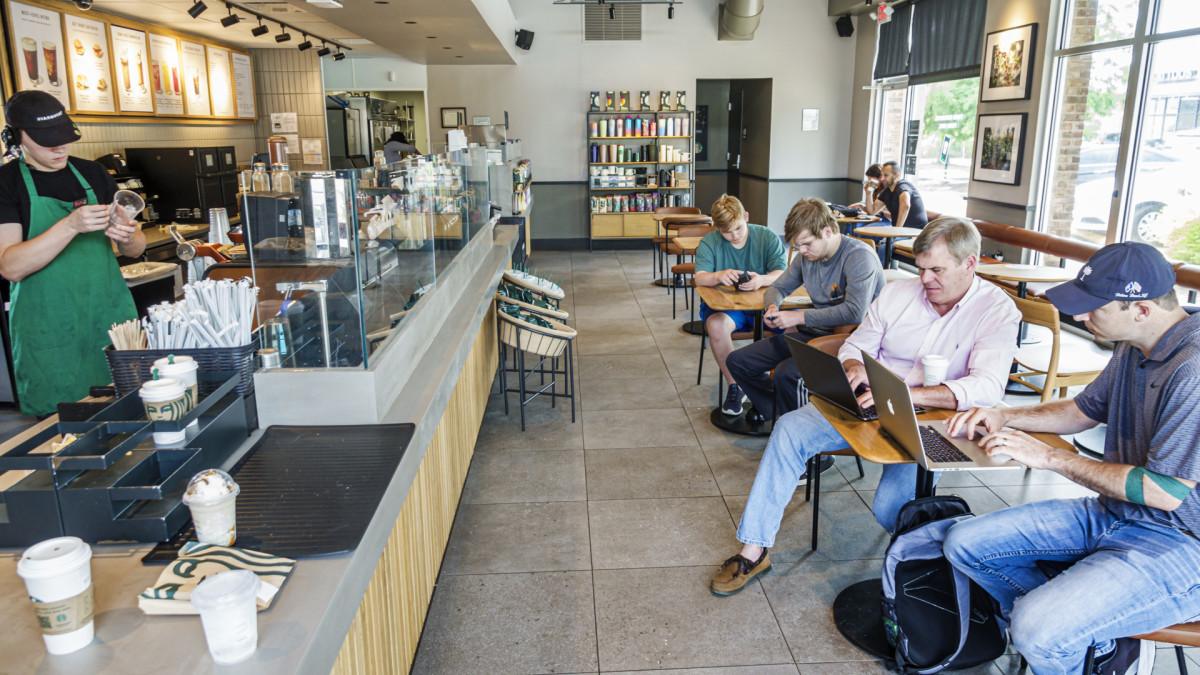
Jeffrey Greenberg/Universal Images Group via Getty Images
Starbucks Workers United responds
The decision has drawn criticism from Starbucks Workers United, the labor union representing around 11,000 Starbucks baristas nationwide.
The union has been pursuing higher wages, more consistent scheduling, and better working conditions since its founding in 2021, according to its website.
“Starbucks continues to fail its hometown,” said Starbucks Workers United in a statement reported by Fox13. “After laying off thousands of corporate employees, opening a new office in Nashville, and closing its flagship stores, CEO Brian Niccol is yet again upending the lives of employees and disrupting customers with no notice or justification.”
The union added that it has filed an unfair labor practice charge and plans to demand bargaining rights with Starbucks regarding the shutdowns.
Inside Starbucks’ “Back to Starbucks” strategy
The store closures come as Starbucks accelerates its broader turnaround plan following several quarters of slowing traffic and declining sales.
The company launched its “Coffeehouse Uplift” initiative, a multi-year effort to invest about $150,000 per store and remodel 1,000 locations by the end of 2026.
Rather than pursuing large-scale renovations that could disrupt operations, the coffee giant says it plans to upgrade stores with minimal downtime by delaying certain new builds and major remodel projects.
More Starbucks News:
- Starbucks makes two big changes to 1,000 stores in 2026
- Starbucks shares bold plan to change in-store experience
- Forget Starbucks, these coffee chains are stealing consumers
These efforts are part of Starbucks’ “Back to Starbucks” strategy, which aims to restore the brand’s identity as a “third place” between home and work. The move focuses on returning to its roots while creating a more personalized and welcoming coffeehouse experience.
However, the transformation has also involved significant cost-cutting measures, including widespread closures and layoffs.
Previous Starbucks store closures and layoffs
In August 2025, Starbucks revealed plans to close all its roughly 90 pickup-only stores located in high-traffic urban areas after determining the format no longer aligned with its long-term strategy.
The company also introduced two new store prototypes to better support its revised coffeehouse model.
One month later, Starbucks unveiled additional restructuring efforts that would take place over the following year, according to a company announcement.
Starbucks’ cost cuts
- Closing approximately 500 North American stores
- Eliminating about 900 non-retail corporate roles
- Removing open positions
However, reinventing one of the world’s largest coffee chains comes at a steep cost.
Starbucks estimates the turnaround effort will require approximately $1 billion in total investment, with around 90% of those expenses concentrated in North America.
Early signs Starbucks’ turnaround may be working
Despite the disruptions, early results suggest Starbucks’ strategy may already be delivering results.
In the first quarter of fiscal 2026, Starbucks reported a global comparable store sales increase of 4% year over year, with North America comparable store sales up 4%. The gains were driven by higher transaction volumes and higher average ticket size.
Monthly visits to Starbucks stores were down about 0.6% during the first half of 2025 but jumped to around 1.6% during the first five months of the second half of the year, according to Placer.ai.
The company also opened 128 net new stores worldwide during the quarter, bringing its total U.S. locations to 16,911.
Starbucks CEO Brian Niccol said the results show the turnaround is progressing faster than expected.
“Our Q1 results demonstrate our ‘Back to Starbucks’ strategy is working and we believe we’re ahead of schedule,” said Niccol in the company’s earnings release. “It’s great to see the sales momentum driven by more customers choosing Starbucks more often.”
Starbucks CFO Cathy Smith added that the company’s initiatives are gaining momentum.
“We have a clear line of sight to translating topline strength into sustainable earnings growth that positions us for long-term profitable growth,” said Smith in the earnings report.
Analysts remain cautiously optimistic
According to MarketBeat, Starbucks currently holds a consensus “Moderate Buy” rating from 28 brokerage firms as of March 2026, with several analysts upgrading the stock to “Outperform.”
Starbucks’ shares have increased 20.46% year to date as of market open on March 11, 2026.
However, some analysts believe the company is still in the early stages of its turnaround.
An investment analyst under the name YR Research on Seeking Alpha assigned Starbucks a “Hold” rating, arguing that expectations of recovery may already be reflected in the stock’s valuation.
“When we get closer to the next stage, that’s when Starbucks might become more attractive. However, right now, valuation is high, and expectations are also high, leaving very little room for upside, if any,” said YR Research.
Meanwhile, Simply Wall St equity analyst Bailey Pemberton said the store closures could open the door for small chains and independent coffee shops to expand into markets that Starbucks once dominated.
“As these shifts play out, you can watch how Starbucks balances its expansion efforts with more targeted store footprints in key regions,” said Pemberton. “Store closures and the handover of some sites to smaller competitors could work against the goal of reestablishing Starbucks as a consistent “third place” if traffic fragments in key urban neighborhoods.”
Related: Wendy’s targets new customer group amid mass U.S. store closures