




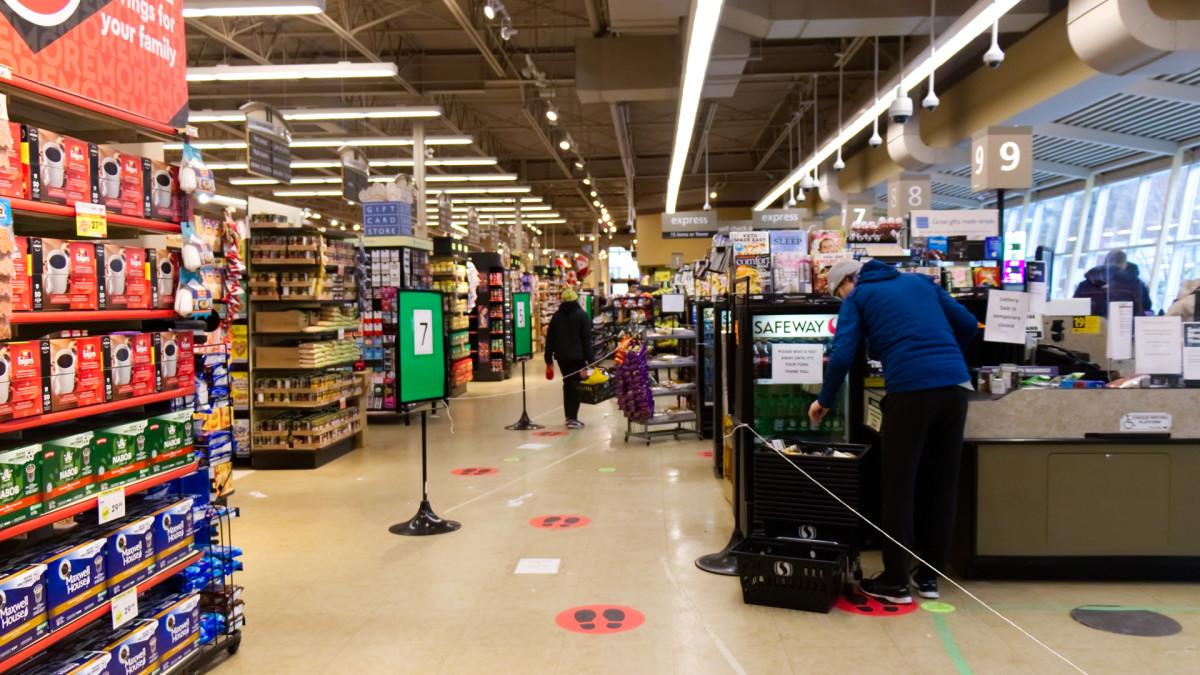

A century-old grocery store chain is continuing a wave of store closures into 2026, signaling a major change in the U.S. retail landscape. For many consumers, the loss of a nearby, affordable grocery store is more than an inconvenience; it can disrupt access to essentials, increase transportation costs, reduce price competition, and strain household budgets.
Following the collapse of a proposed $24.6 billion merger between Kroger (KR) and Albertsons, both companies have shifted away from expansion and toward consolidation. Rather than growing their national footprint, they are closing underperforming locations and reallocating resources to higher-performing stores and digital operations.
Founded in 1939, Albertsons (ACI) is one of the largest food and drug retailers in the U.S., operating 2,243 stores, along with pharmacies, fuel centers, distribution facilities, and manufacturing plants, according to company disclosures.
Its portfolio spans 22 banners across 35 states, including Albertsons, Safeway, Vons, Jewel-Osco, Shaw’s, ACME, Tom Thumb, Randalls, United Supermarkets, Pavilions, Star Market, Haggen, Carrs, Kings Food Markets, and Balducci’s Food Lovers Market.
Two years after the Federal Trade Commission blocked the merger in 2024, Albertsons continues to streamline operations, with yet another closure now confirmed.
Safeway confirms another store closure
Safeway will permanently close its Hechinger Mall location at 1601 Maryland Ave NE in Washington, D.C., ending nearly 40 years of serving the community. The store is scheduled to shut down on May 16, while its pharmacy will cease operations earlier, on April 1.
“Like all retailers, we are constantly evaluating our store footprint and have to look at every angle of the business. This includes our real estate portfolio. We are coming to the end of our lease at this location, and have made the decision to reinvest our resources into other existing stores,” said Safeway in a statement reported by DC News Now.
Founded in 1915, Safeway was acquired by Albertsons in a $9.2 billion merger completed in 2015, which also included the Vons chain, according to the SEC filings.
Albertsons’ store closures extend across multiple banners
This latest shutdown is part of a broader pattern. Albertsons has closed dozens of stores across its portfolio, with at least 30 locations shuttered in 2025, and additional closures already underway in 2026.
2025 closures
- Safeway: Closed 12 stores, according to TheStreet.
- Carrs: Closed a store in Anchorage, Alaska, in May, according to Alaska News Source.
- Albertsons: Closed a store in Southwest Portland, Oregon, in July, according to KGW8.
- United Supermarkets: Closed a store in Kingfisher, Oklahoma, in July, according to Kingfisher Press.
- Multiple banners: Closed 15 stores across multiple banners, according to Albertsons Companies’ latest earnings report.
2026 closures
- Vons: Closed a store in Escondido, California, in May, according to the San Diego Union-Tribune.
- Albertsons: Closed a store in Las Vegas, Nevada, in May, according to KLAS 8 News Now.
Albertsons’ cost-cutting strategy behind the downsizing
Albertsons’ closures are part of a broader cost-reducing effort to improve margins and offset rising operational costs.
In early 2025, the company announced plans to cut $1.5 billion in expenses by 2027, focusing heavily on selling, general, and administrative costs (SG&A), according to an earnings call.
As part of that initiative, Albertsons eliminated hundreds of corporate roles, including 225 jobs at an office in Phoenix, Arizona, and 156 at two offices in Pleasanton, California, as reported by BoiseDev.
“As we navigate a dynamic operating environment, it’s critical that we unlock the sustainable efficiencies to reinvest our strategic growth initiatives to offset inflationary headwinds, including annual union labor cost increases,” said Albertsons CEO Susan Morris in an earnings call.
The company said savings will be reinvested into digital capabilities, retail media, pricing strategies, technology modernization, and operational productivity, critical areas that will allow it to better compete with larger rivals and e-commerce platforms.
Albertsons’ financial results show early improvement
Despite the closures and layoffs, Albertsons has reported modest financial improvements.
In the third quarter of fiscal 2025, net sales increased 1.9% year over year to $19.1 billion, with comparable sales up 2.4%. The company attributes this growth primarily to improved cost efficiencies and reduced merger-related expenses.
Selling and administrative expenses decreased to 24.9% of net sales and other revenue, compared to 25.1% during the same period in 2024, indicating early progress in its cost-control strategy.
Retail downsizing continues to reshape communities
Albertsons’ downsizing reflects a wider industry trend. Retailers across the U.S. are reducing physical footprints as they adapt to e-commerce growth, shifting consumer habits, and persistent cost pressures.
U.S. retailers are expected to close approximately 7,900 stores in 2026, down 4.5% from 2025, while 5,500 locations are projected to open, up 4.4%, according to Coresight’s U.S. Store Tracker 2026 Outlook.
The impact is uneven. Store closures disproportionately affect lower-income and rural communities, where fewer alternatives exist, and transportation options may be limited.
“For consumers, the fallout means fewer choices, diminished access to in-person shopping, and, in some cases, higher prices due to reduced competition,” said Approved Funding President and Chief Lending Officer Shmuel Shayowitz.
Layoffs and economic pressures add to concerns
The wave of closures is also contributing to broader labor market pressures.
More than 1.2 million job cuts were made in 2025, a 58% increase from the year prior, according to the Challenger, Gray, & Christmas 2025 Job Cut Announcement Report. The retail sector alone accounted for nearly 93,000 layoffs, a 123% surge.
Meanwhile, the U.S. Bureau of Labor Statistics‘ Employment Situation update showed that the unemployment rate stood at 4.4% in May 2026, representing approximately 7.6 million unemployed Americans.
Long-term implications for retail and local economies
Analysts warn that continued store closures and workforce reductions could have lasting effects beyond the retail sector.
Fewer physical locations can weaken local economies, reduce access to essential goods, and accelerate the shift toward online shopping, often leaving smaller communities with fewer options.
More Retail Business News:
- Walmart is quietly becoming a go-to for designer brands
- 39-year-old mattress chain shares Chapter 11 bankruptcy warning
- 106-year-old retail brand operator closing all stores in bankruptcy
“The widespread closures of physical retail stores in the digital age significantly impact business outcomes, urban communities, and regional economies,” said industry analysts at ScienceDirect.
As retailers like Albertsons continue to adapt, the challenge will be balancing operational efficiency with community access, a growing concern for the future of brick-and-mortar retail.
Related: 113-year-old grocery chain quietly closes stores in 2026